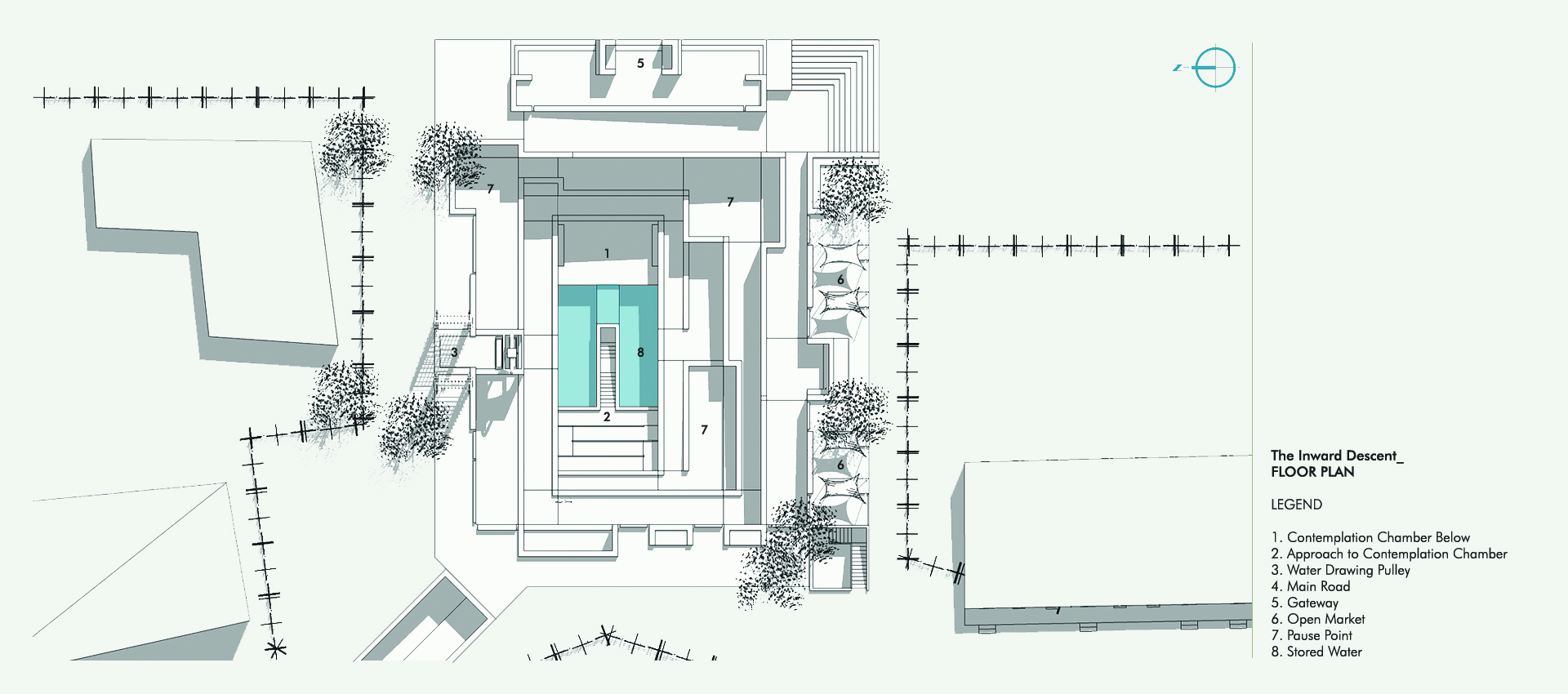



The project aspires to meet the physical needs of the community through providing an essential storage space for water as well as creating a space for the community to gather and also express their spirituality which was an important aspect of the brief.
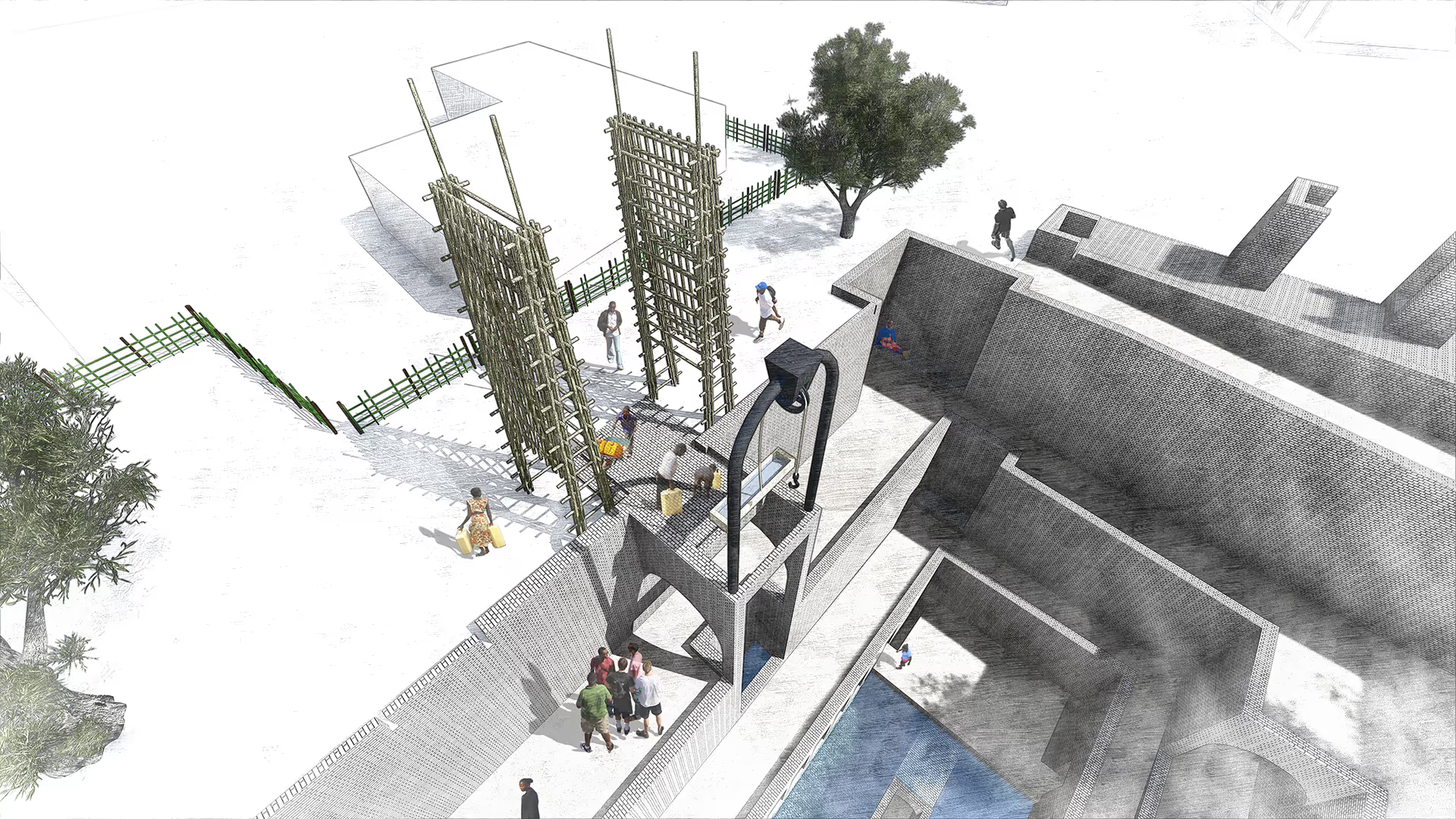
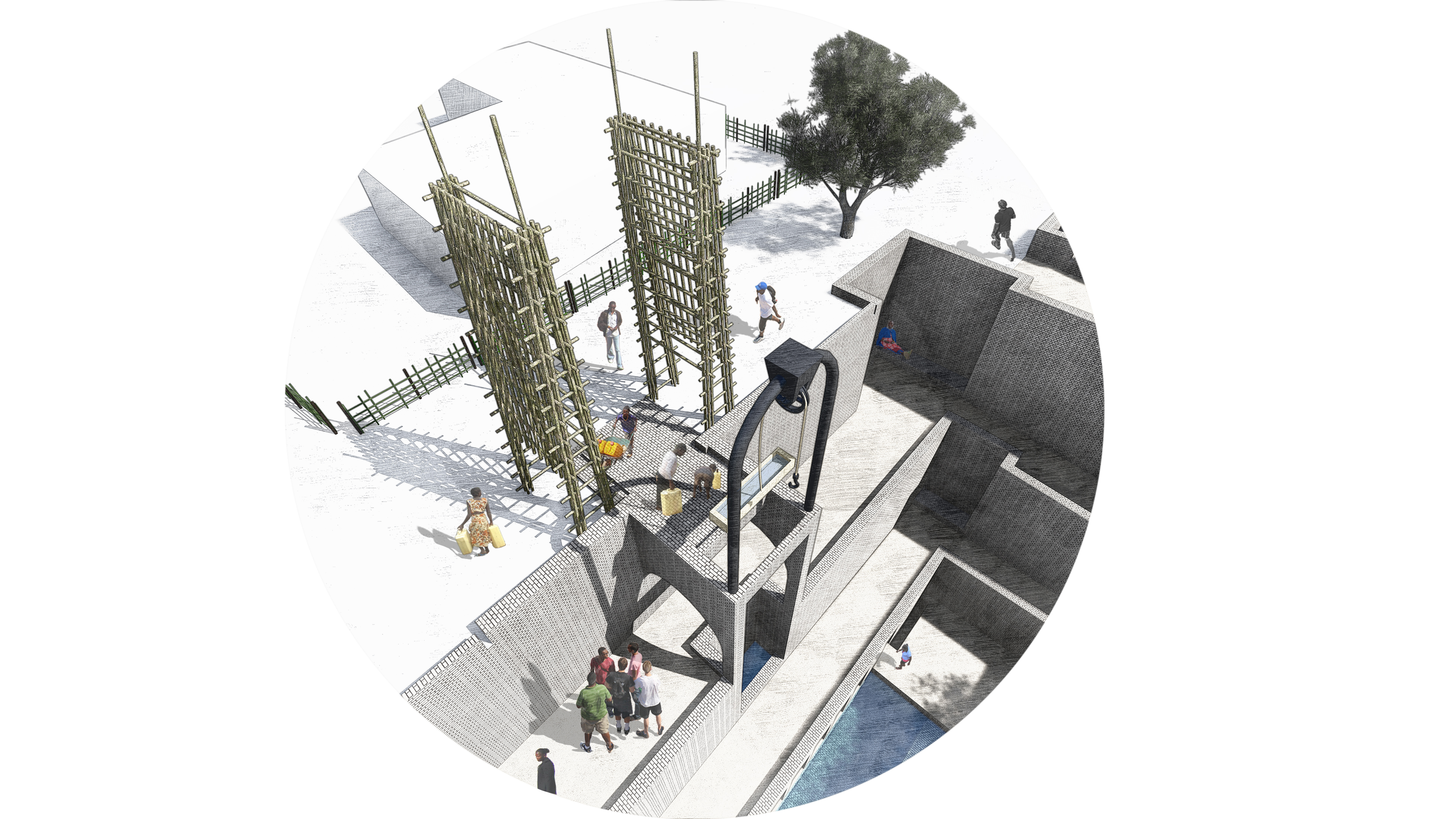
To design a place of worship means creating a new landmark, but also giving substance to a culture of a community. For any community to sustain its existence, water is a crucial necessity and the absence of which could cause a lot of distress among the settlement. For peace and prosperity within a region it is important for the essentials and basic necessities to be met on a daily basis. The project strives to address these needs through a unique intervention.
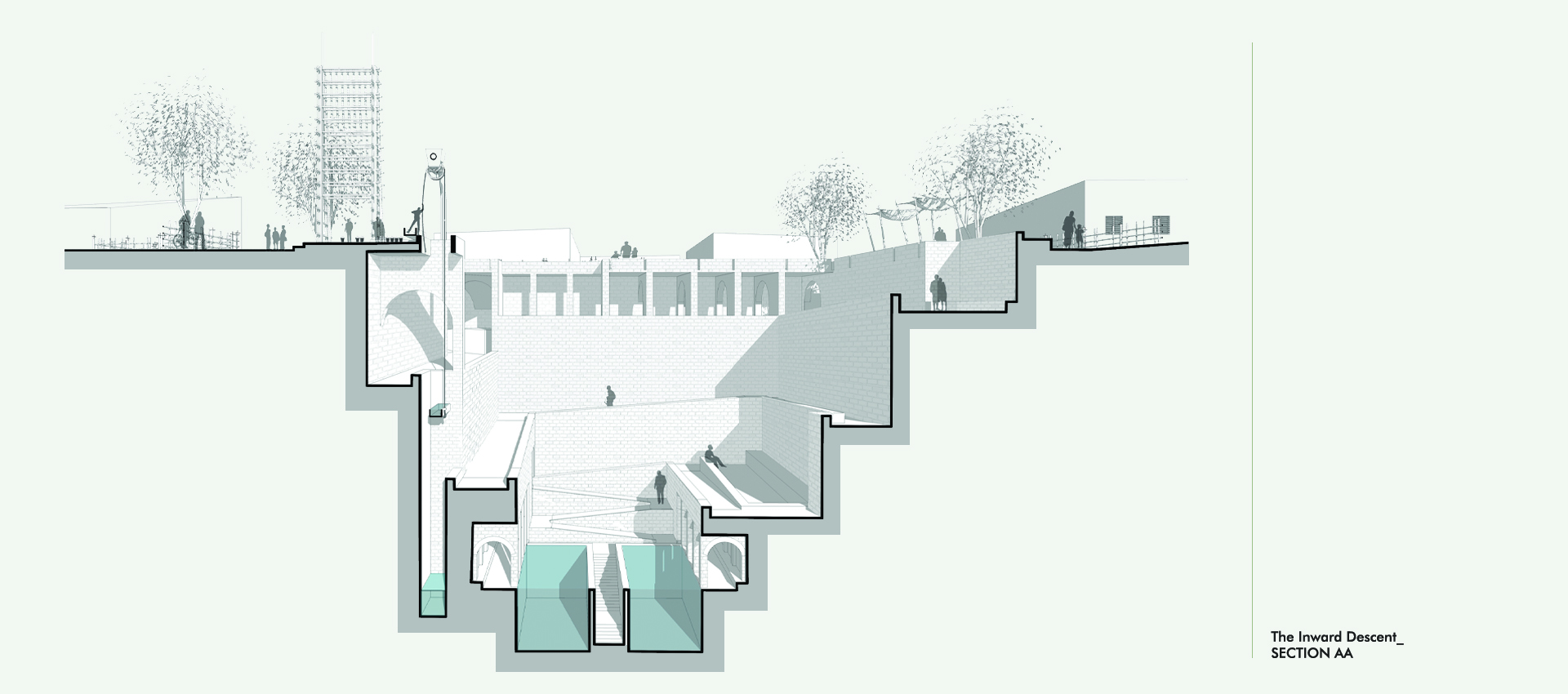
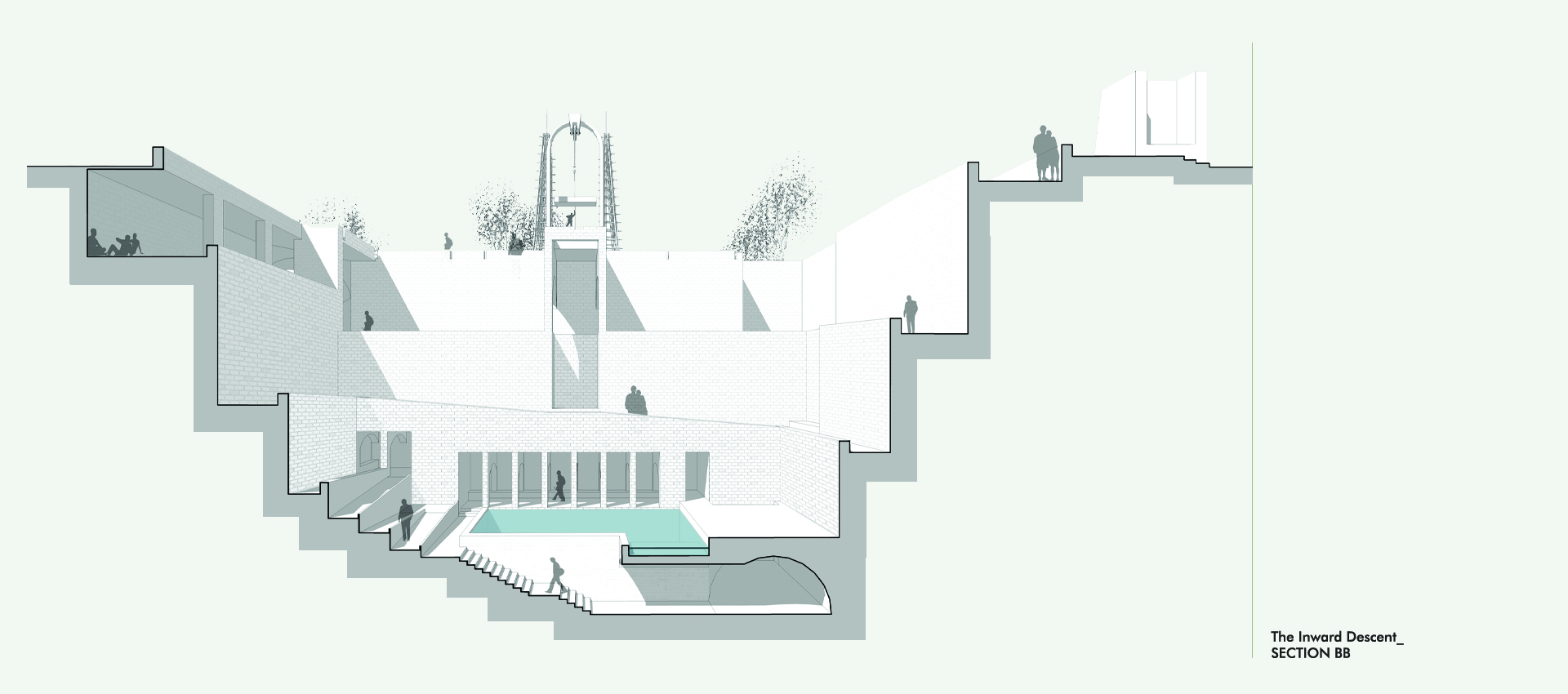
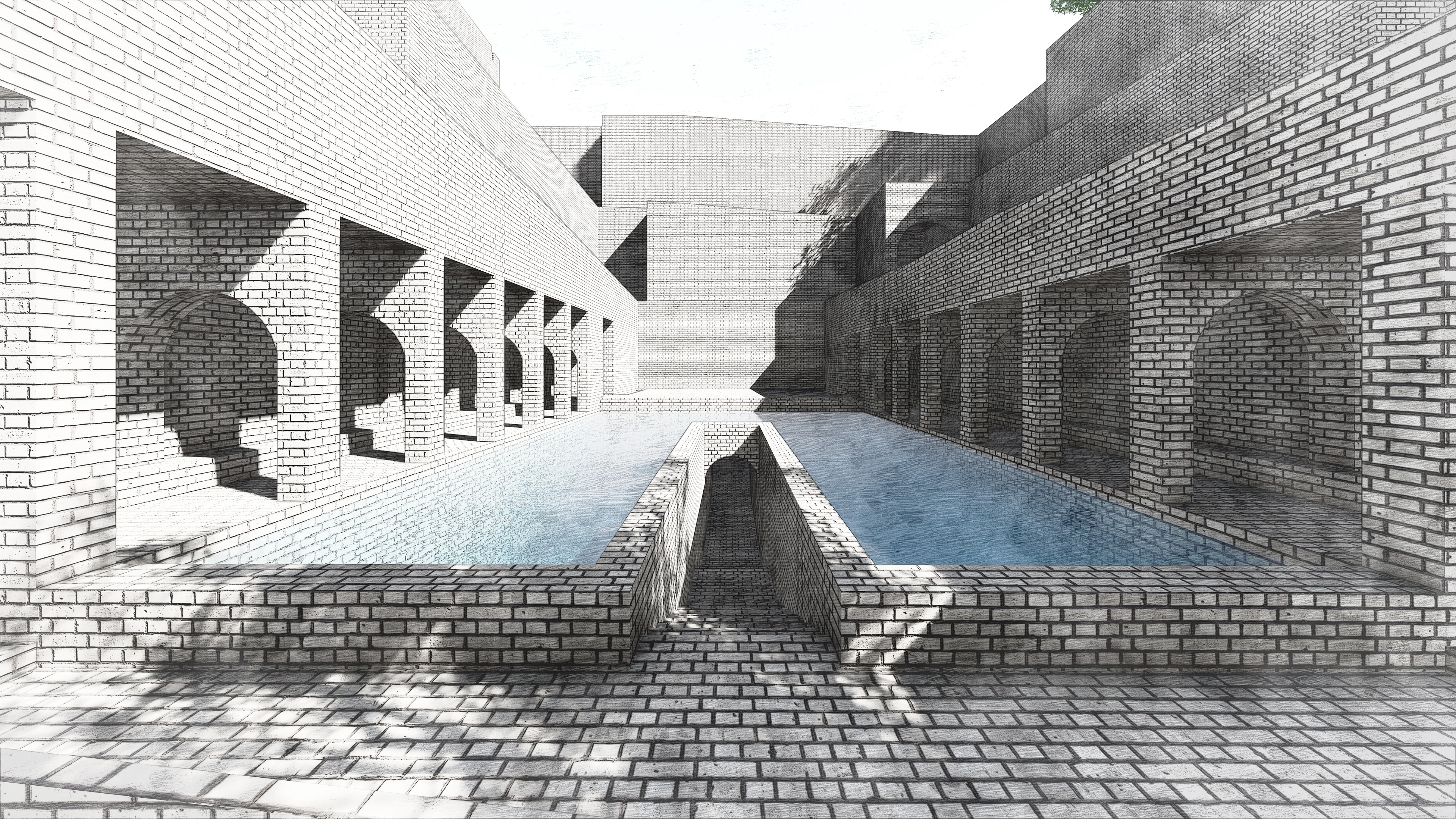
As the project approaches the question of spirituality, it grounds itself in the realities of the context. Here, in the ramp well, the experience of the space is formed by the materiality of the earth bricks while the senses react to the micro-climate created by the presence of water. While the need for water is prevalent, its mere presence is a relief in the minds of the people. Water also has remained of social importance since ages in different contexts and remains a catalyst of the social space rather than it just being a utilitarian entity. The water acts as the termination to the public spaces created by the ramps and further on one would only traverse if they want solace from the activities of the well. It thus acts as a barrier to sound, light, smell and the temperature to make the contemplation chamber devoid of any influence from its surrounding.
A step-well is an established water-structure in hot climates. Traditionally, they were made up of locally available stones for retaining the earth. In this proposal, the earth which is excavated for the construction is used as Stabilized Earth blocks to create retaining and load bearing walls wherever necessary. The spanning of spaces also consists of a similar material and a composite with stone wherever necessary. Apart from the low embodied energy of the structure, rains were one of the most important factors in shaping the well. The water from the entire footprint is funnelled into the well, and thus recharging the ground water directly. Also, the lowermost portion of the well is designed for flooding as the ground water table increases with rainfall and reduces in other seasons.
Design Team: Caleb, Naomy Parikh (Collaborator), Hitarth Majithia (Collaborator)

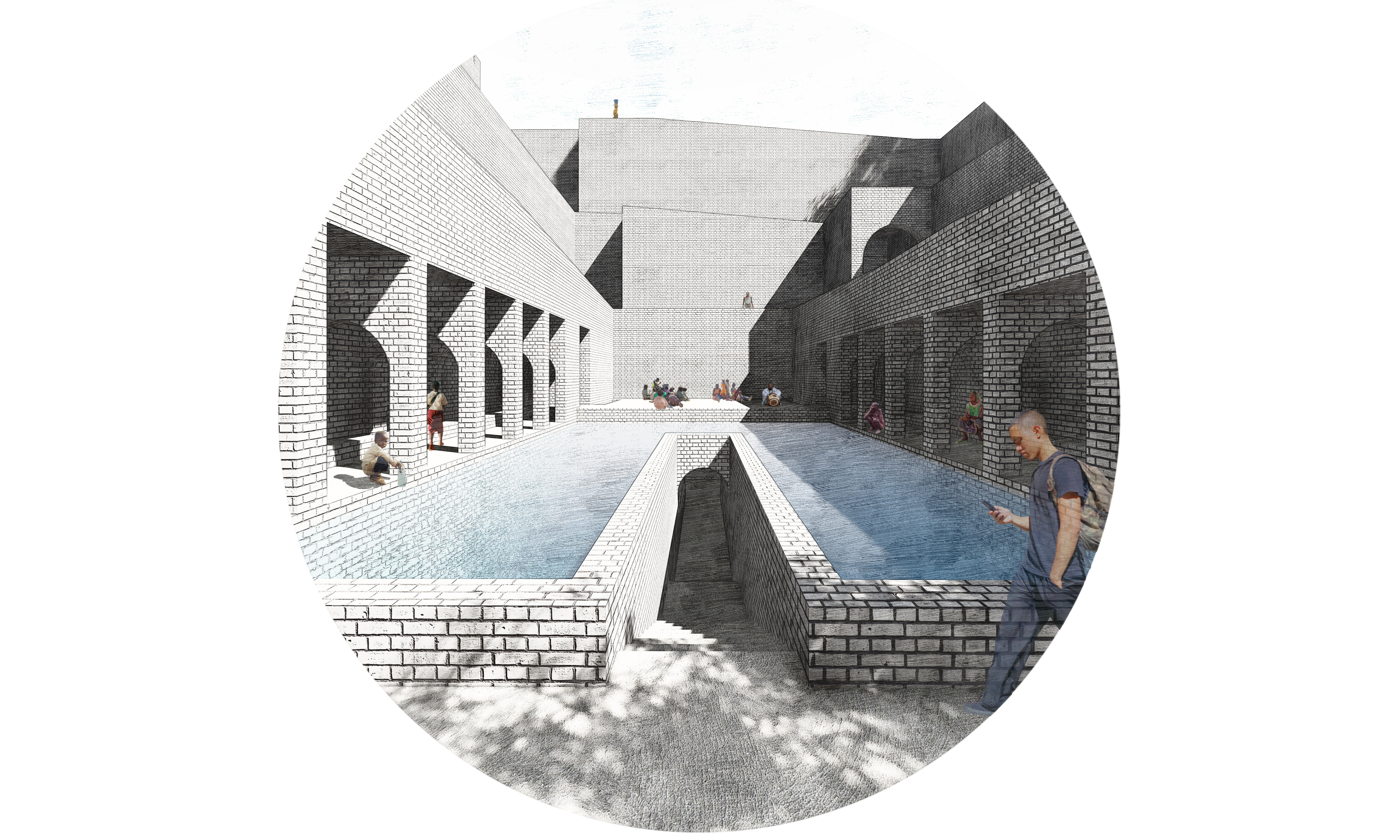
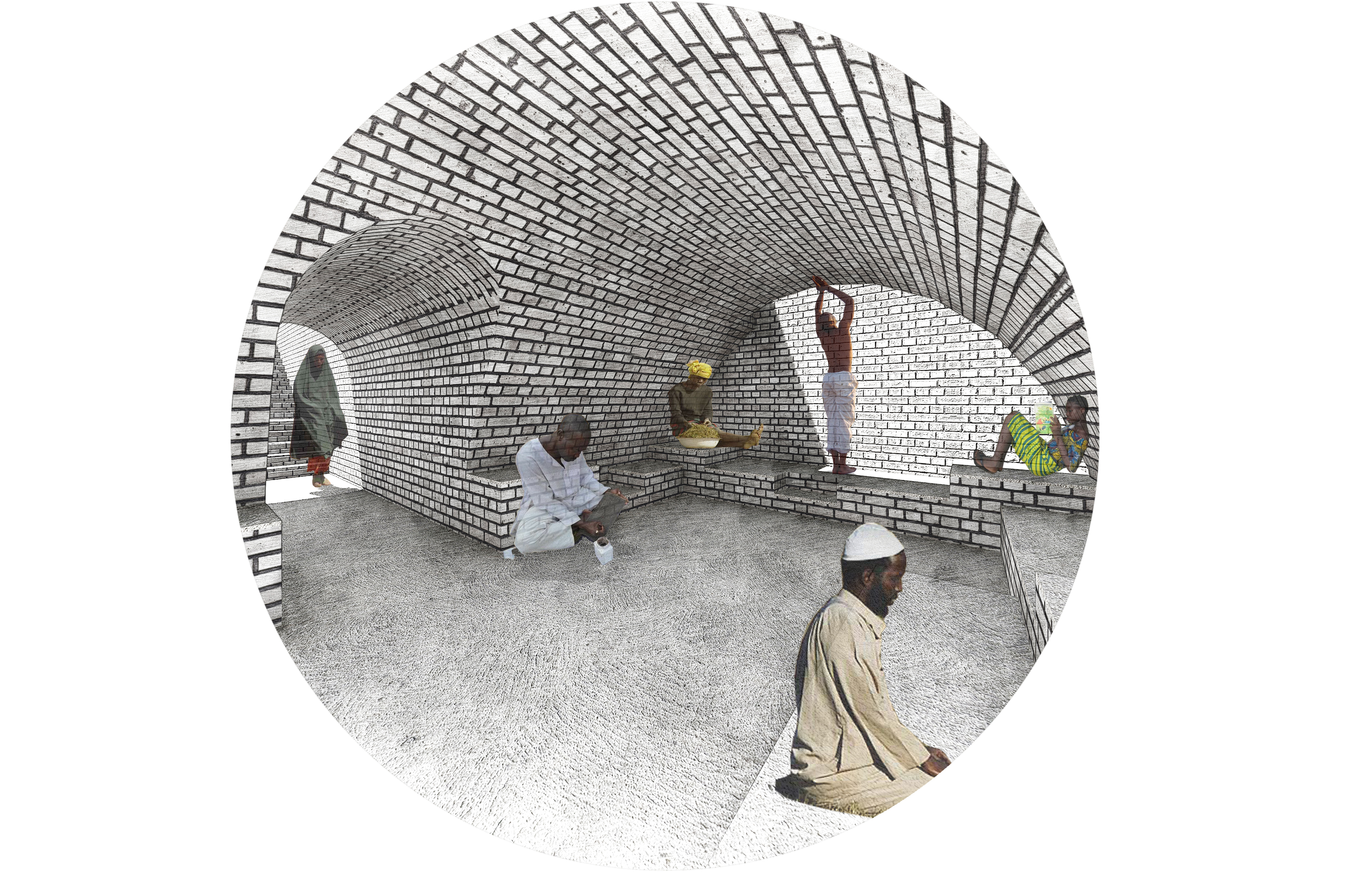
This well, thus defines its appropriateness by being driven by culture and being sustainable for a place with a lack of materials and with low technology. Moreover, it responds to the sacredness of architecture while helping communities to overcome difficulties in their daily life.